
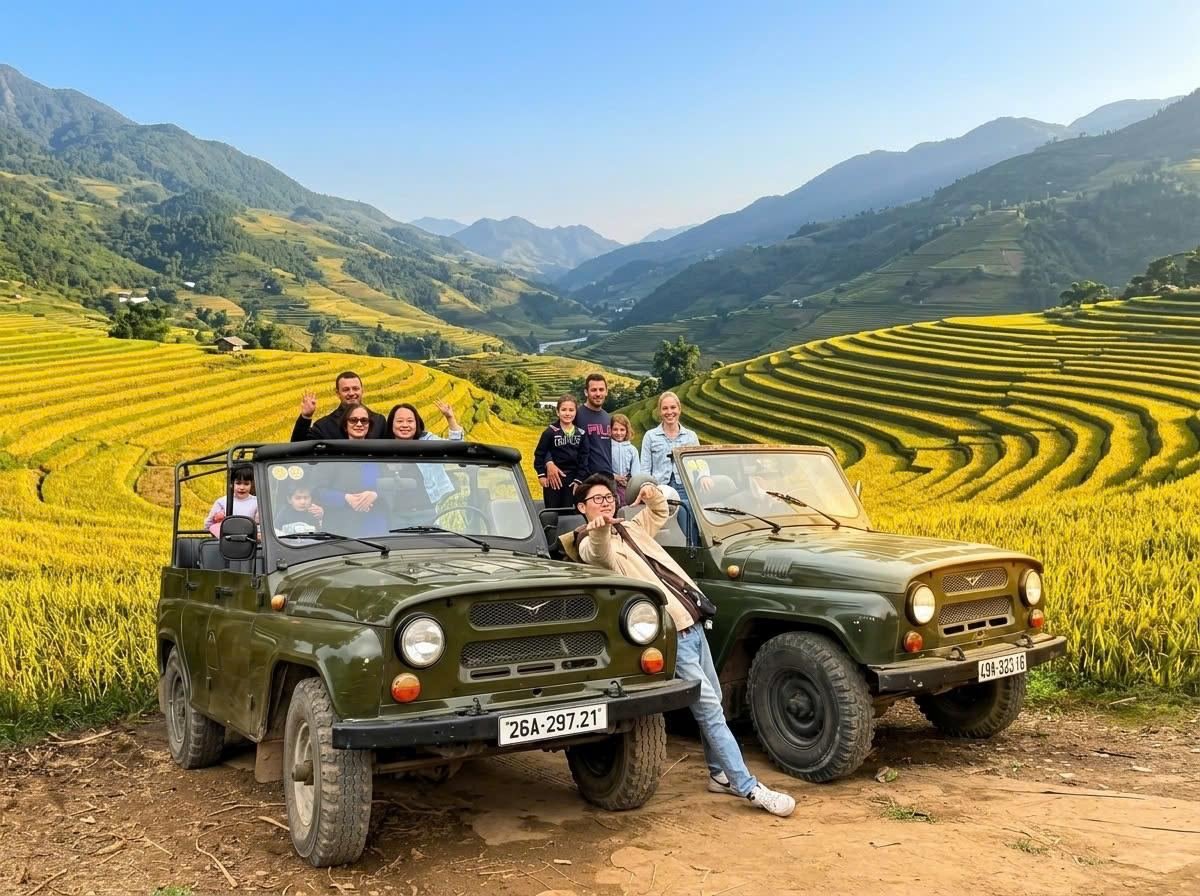
Short answer: Sapa grows one rice crop a year. The terraces are flooded and mirror-like around May, young and bright green in June and July, deep green in August, and golden in September before the harvest. From October to March the fields are harvested and bare. Exact dates move by a week or two each year with the rain and the altitude.
Why the terraces change so much
The terraces around Sapa were carved over generations by H'mong, Dao and Giay farmers to grow rice on slopes that are otherwise too steep to farm. At this altitude the growing season is short and cool, so families plant a single rice crop a year, timed to the start of the rains. Everything you see from a viewpoint, from silver water to green shoots to gold, is that one crop moving through its year.
Two things shift the calendar. Lower fields warm up first, so they are planted and ripen earlier than the terraces high on the slopes; in late August you can see yellow at the bottom of a valley and green at the top. And a late or early start to the rains moves everything by a week or two. Treat the months below as a guide, not a timetable.
Month by month
January and February: bare and cold
The terraces are dry and brown, sometimes white with frost on the coldest mornings. The shapes of the terraces stand out clearly. Peach and plum blossom appear around the Lunar New Year (Tet), which falls in late January or February.
March: preparing the fields
Mild, often clear days. Fields are still mostly bare while families repair terrace walls and irrigation channels.
April: ploughing and the first water
Buffalo and hand ploughs turn the soil, and water is channelled onto the lower terraces towards the end of the month.
May: the water season
The most photogenic month for many photographers. Flooded terraces reflect the sky like stacked mirrors, and transplanting of seedlings begins. Showers become more frequent.
June: planting and fresh green
Transplanting finishes and the terraces turn a light, fresh green. The rainy season is under way.
July: lush green
The valley is at its most vivid. Expect heavy showers, mist and slippery paths, and waterfalls at full power.
August: deep green, first yellow
The rice is tall and dark green. From late August, the lowest fields start to turn yellow.
September: golden season
The classic month. Ripe rice covers the terraces and skies are often clearer than in summer. Harvest begins in the lower fields during the month. It is also the busiest time for visitors, especially at weekends and around Vietnam's National Day on 2 September, so book rooms and tours early.
October: harvest ends
The last fields are cut in early October. Stubble, drying straw and cool, clear weather make it a good month for walking and views, even without the gold.
November and December: quiet terraces
Bare terraces, dry air and some of the best sea-of-clouds mornings of the year. See our cloud hunting tips.
Where to see the terraces
- Muong Hoa Valley: the big one, with terraces on both sides of the stream around Y Linh Ho, Lao Chai and Ta Van.
- Moana Sapa: a set of photo viewpoints above the valley, with a ticket.
- Lao Chai and Ta Van: walk among the terraces rather than looking down at them.
- Around Cat Cat: smaller terraces close to town, good if you only have an afternoon.
Some families who own the best-placed corners charge a small fee to use their viewpoint. It is their land, so pay or move on. For the bigger picture of Sapa's weather in each season and what to pack, see Eco Trip Asia's Sapa weather and packing guide.
Seeing the terraces by Jeep or motorbike
The fastest way to see several terraced viewpoints in a morning is by vehicle. Our photo route by motorbike, riding pillion behind local female riders, stops at Cat Cat, Moana and the Muong Hoa terraces (about 4 to 4.5 hours, $50 per person); check dates on Eco Trip Asia's Sapa photo tour page. Prefer four wheels? The Muong Hoa Valley Jeep route covers the valley viewpoint, a short walk through Lao Chai and Ta Van, and Moana for the same price.
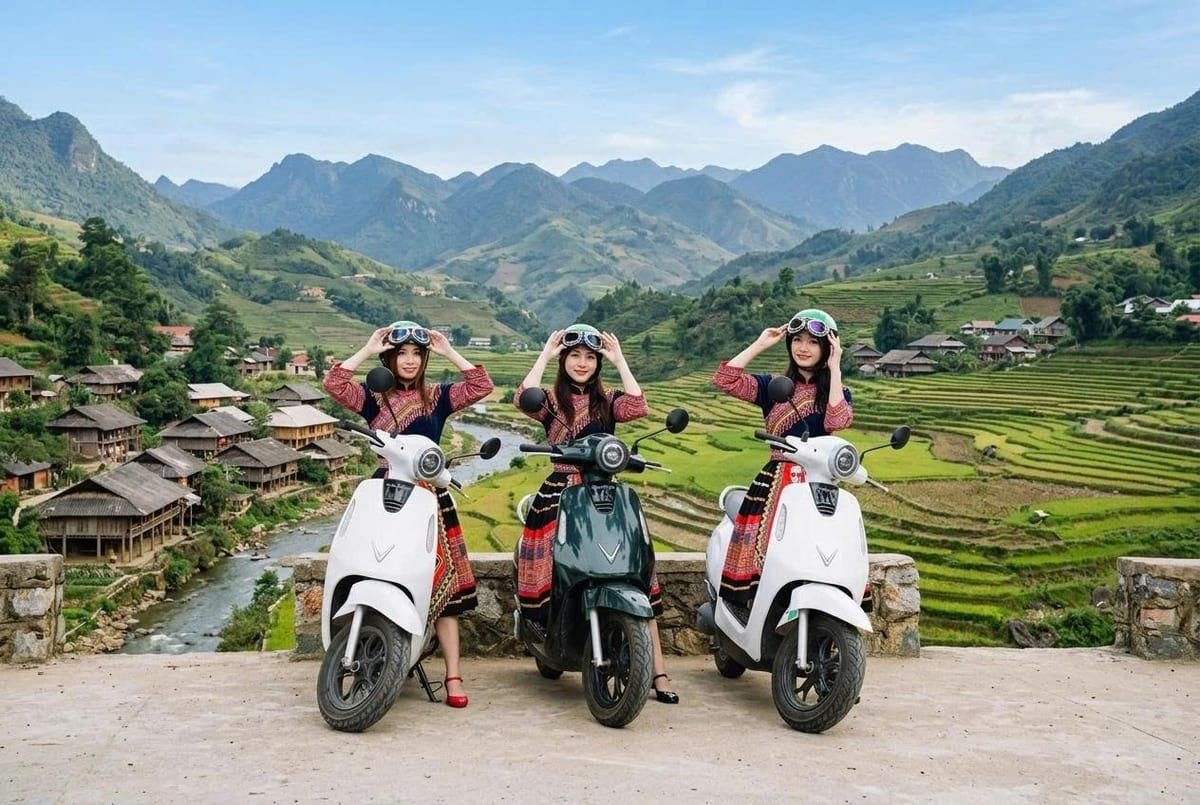 Photo Tour
⏱️ 4–4.5 Hours
Sapa Instagram Motorbike Tour with Female Riders
Fit walkers can also go on foot: our Sapa trekking routes guide explains which trails cross the terraces and how hard they are.
Photo and etiquette tips
- Light: early morning and late afternoon give side light that shows the terrace lines; midday light flattens them.
- Water season: still mornings give the best reflections; a little cloud adds texture.
- Golden season: after rain, the colours are richer. Mist usually burns off by mid-morning.
- Stay on paths and walls: never walk into planted fields or across soft terrace edges; one collapsed wall is a lot of work for a family.
- People: ask before photographing farmers at work, especially at harvest.
- Season planning: our best time to visit Sapa guide covers weather, crowds and holidays month by month.
Frequently asked questions
When are the Sapa rice terraces golden?
Usually in September, sometimes from late August to early October depending on altitude and the year. Lower fields ripen first.
When are the terraces full of water?
Mostly in May, with flooding and planting running from late April into June.
Are the terraces worth seeing in winter?
The fields are bare from about October to March, but the shapes of the terraces are clearer and the air is often crisp. Expect cold, fog on some days and occasional frost.
Where are the best rice terrace views near Sapa?
The Muong Hoa Valley around Lao Chai, Ta Van and Y Linh Ho, the Moana viewpoints above it, and the slopes around Cat Cat.
