
What makes Sapa crafts special
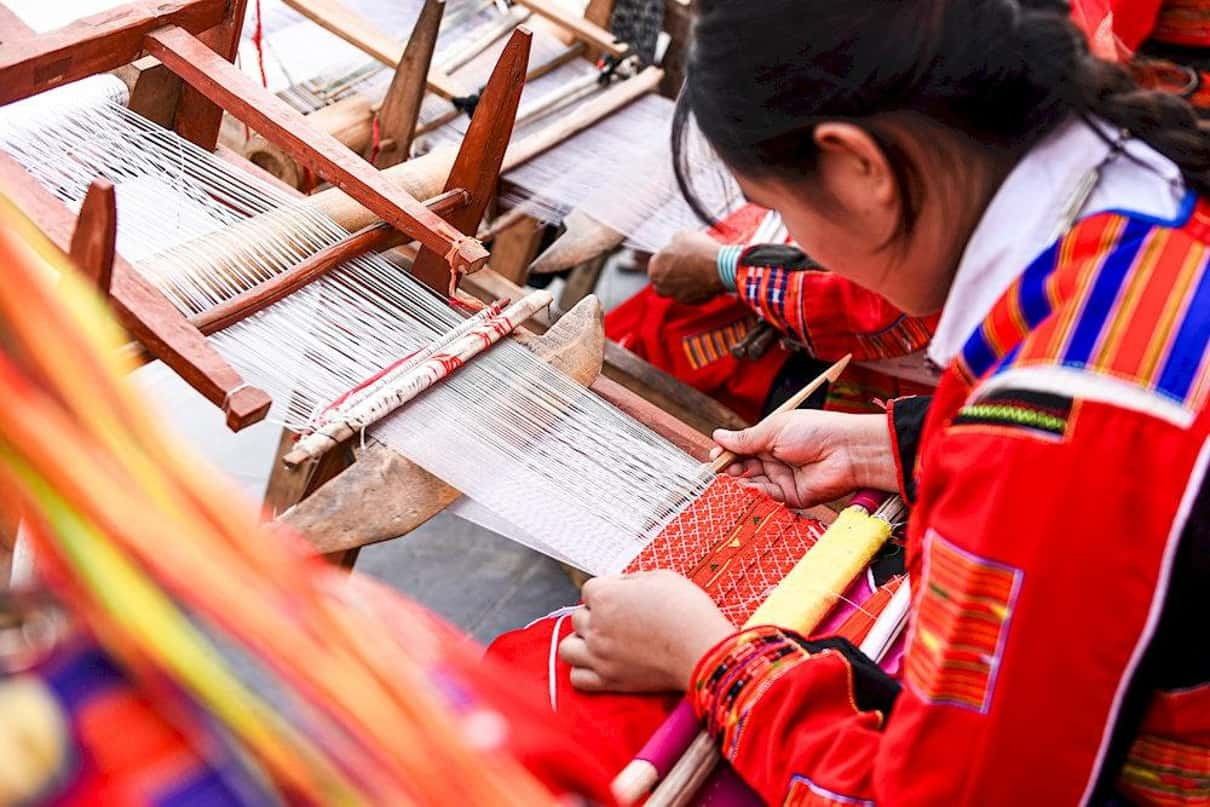
Many textiles sold in Sapa are made by the women of the H'mong and Red Dao communities, using skills passed down for generations: growing and weaving hemp, dyeing with indigo, drawing batik patterns with beeswax, and embroidering by hand. A single embroidered panel can take weeks. Buying well supports families directly and brings home something genuine.
What to buy
Indigo cloth and batik
Hemp or cotton dyed deep blue with indigo, often with batik patterns drawn in wax before dyeing. Look for scarves, bags, table runners and lengths of cloth.
Embroidery
- Black H'mong: geometric patterns in rich colours on dark indigo, used on jackets, collars and bags.
- Red Dao: dense, colourful cross-stitch, often in red, yellow and green, with silver coins and tassels.
Panels, cushion covers, wall hangings and small bags are easy to pack.
Silver jewellery
H'mong and Dao people wear silver for beauty and protection. You will find bracelets, earrings, necklaces and rings. Quality varies widely, from real silver to alloys; if price matters, buy from a reputable shop.
Food and herbal products
- Smoked buffalo or pork, vacuum-packed
- Dried mushrooms and shiitake
- Local teas and herbal bath mixes from Ta Phin
- Honey and táo mèo apple wine
Other ideas
Woven baskets, wooden kitchen tools, hand-made paper and small musical instruments.
 Best Seller
⏱️ 4–4.5 Hours
Sapa Open-Air Jeep Tour: Lao Chai, Ta Van Villages & Moana
Where to shop
Sapa town
The market in the centre and the shops around the Stone Church sell a wide range of goods. Quality is mixed and many items are factory-made, but it is convenient.
Villages
In Cat Cat, Lao Chai, Ta Van and Ta Phin, women sell their own work along the paths and from their homes. This is often the best way to buy directly from the maker.
Weekly markets in the region
Market day is a social event in the mountains, where people from many villages meet to trade buffalo, tools, food and cloth.
- Bac Ha Sunday market: the most famous, known for Flower H'mong in bright clothing. Bac Ha is about 100 km from Sapa, roughly 2.5 to 3 hours each way, so it is a full-day trip.
- Other weekly markets: smaller markets such as Can Cau and Coc Ly run on set days. Schedules can change; ask a local guide for the current days.
How to tell hand-made from factory-made
- Price: real hand embroidery takes days or weeks; very cheap pieces are almost never hand-made.
- Stitching: hand stitches show small irregularities; machine stitching is perfectly even.
- Back side: look at the reverse. Hand work shows knots and thread ends.
- Indigo: real indigo has a slightly uneven colour and can rub off at first.
- Repetition: identical items in every shop usually mean mass production.
How to bargain and buy fairly
- Ask the price, then offer a little less if you wish. Bargaining is normal, but keep it friendly.
- Stop when you are close; small amounts matter far more to the seller.
- Once you agree, pay without changing your mind.
- Spread purchases across several sellers.
- If you do not want to buy, a smile and "không, cảm ơn" (no, thank you) is fine.
Packing and care
- Indigo can bleed. Wash it separately in cold water the first few times.
- Fold textiles flat in a plastic bag to protect them from damp.
- Check your home country's rules on bringing in food and plant products.
Shopping on a tour
Our day tours pass craft stalls in the villages of Muong Hoa Valley, so you can see work close up and buy without a special trip. For background on who makes what, read Sapa's ethnic villages and responsible travel in Sapa. For edible souvenirs, see the food guide.
Frequently asked questions
What should I buy in Sapa?
Indigo cloth, H'mong and Red Dao embroidery, silver jewellery, and food souvenirs such as smoked buffalo, dried mushrooms and local tea.
How far is Bac Ha market from Sapa?
About 100 km, roughly 2.5 to 3 hours each way. The market is held on Sundays.
How can I tell if embroidery is hand-made?
Check the back for knots and uneven stitches, compare prices, and be wary of identical items in every shop.
Is bargaining expected?
Yes, but keep it friendly and stop when the price is close. Small amounts matter more to the seller.
