
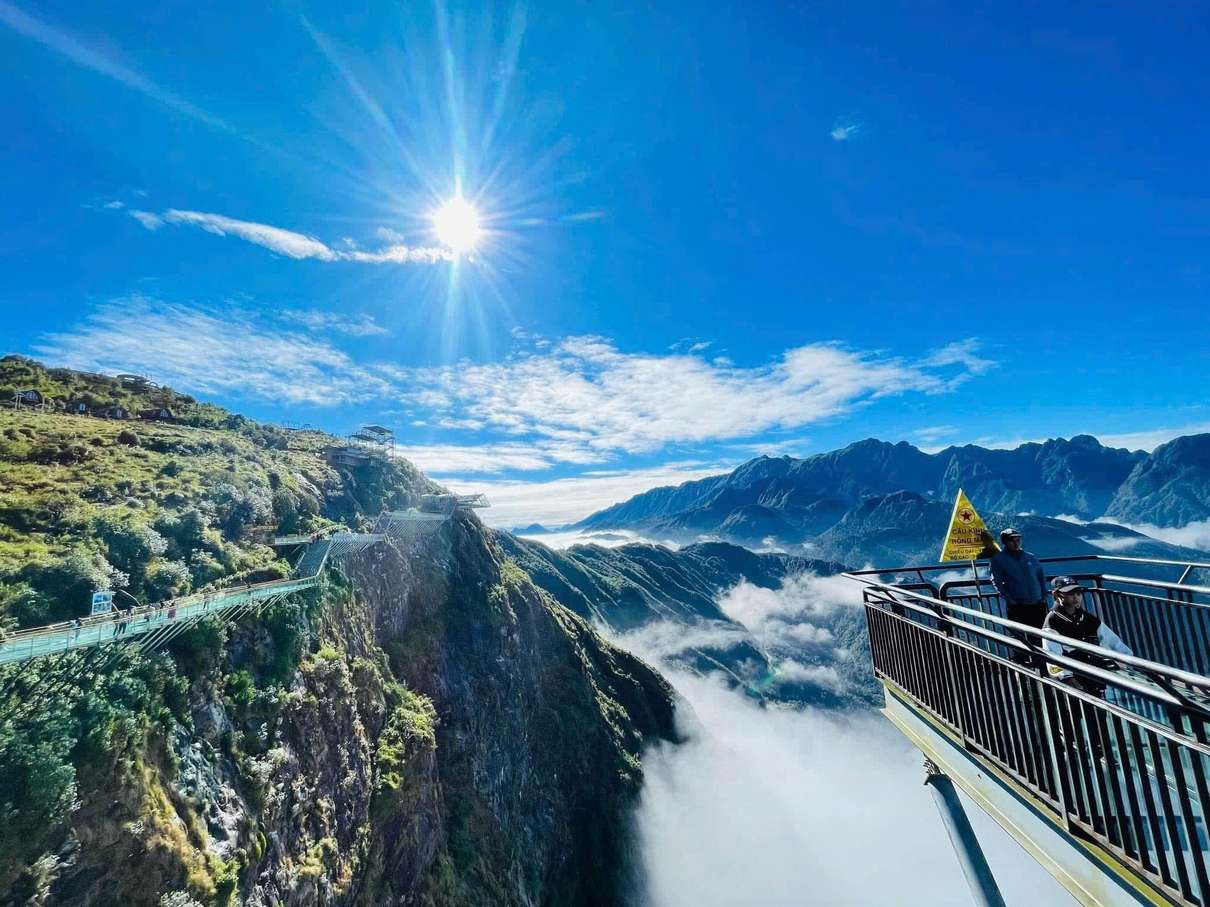
Short answer: Tram Ton is not a separate pass. It is the highest point of O Quy Ho Pass, the roughly 50 km mountain road (National Road 4D) between Sapa in Lao Cai and Tam Duong in Lai Chau, topping out at around 2,000 m. From Sapa, the classic half-day covers Silver Waterfall, Love Waterfall, the pass summit, the Lonely Tree and Rong May Glass Bridge. Go in the morning, take a Jeep or ride with a local rider, and bring a windproof layer.
One road, two names
O Quy Ho is one of the "four great passes" of northern Vietnam, along with Ma Pi Leng, Pha Din and Khau Pha. It runs for around 50 km over the Hoang Lien Son range, linking Sapa (Lao Cai province) with Tam Duong in Lai Chau. Tram Ton is the name of the highest section, at around 2,000 m, where the road crosses the provincial border. The Tram Ton forest station there is also the start of the shortest trekking route up Fansipan.
So when someone asks "O Quy Ho or Tram Ton?", the answer is: they are on the same trip. The real choices are how far you go and how you travel.
The route from Sapa, stop by stop
1. Sapa town (about 1,500 m): leave on National Road 4D towards Lai Chau. 2. Silver Waterfall (about 12 km): a tall waterfall beside the road with stairs to the spray. See the waterfall guide. 3. Love Waterfall entrance: a forest walk of about 1.5 to 2 km each way. 4. Tram Ton summit (around 2,000 m): the border between Lao Cai and Lai Chau, often in cloud, with wide views when it lifts. 5. The Lonely Tree (Cây Cô Đơn): a single tree on a ridge on the Lai Chau side, a classic photo stop. 6. Rong May Glass Bridge: a glass walkway over the cliff with sweeping views (separate ticket, bought on site). 7. Viewpoints on the descent: hairpins winding down into Lai Chau, famous at sunset.
Most visitors from Sapa go as far as the glass bridge and return. Continuing to Lai Chau and beyond is a different trip.
 Adventure Pick
⏱️ 4–4.5 Hours
Sapa Jeep Adventure: Silver Waterfall, O Quy Ho Pass & Glass Bridge
What makes the pass special
- Scale: a long ribbon of road carved into steep mountainsides, with views across the highest range in Vietnam.
- Clouds: cloud often fills the valleys below, especially on cool mornings. A sea of clouds is possible but never guaranteed.
- Sunsets: the Lai Chau side faces west, so evening light can be beautiful.
- Weather drama: the summit often has its own weather, with sun on one side and fog on the other.
How to travel the pass
Open-air Jeep
Comfortable, social and safe, with a professional driver and an English-speaking guide. Good for families and mixed groups. Our Jeep Adventure covers Silver Waterfall, O Quy Ho, the Lonely Tree and Rong May Glass Bridge in four to four and a half hours, from $50 per person, departing 8:00 AM or 1:00 PM from Sapa Stone Church. The Silver Waterfall ticket is included.
Motorbike with a local rider
You ride as a passenger behind a local female rider on our O Quy Ho motorbike tour. You feel the bends and the wind without needing a licence or experience. Same price and duration as the Jeep version.
Self-drive
Only for experienced riders with a valid licence. The road is steep, with tight bends, gravel and mud after rain, fog that drops visibility to a few metres, and heavy trucks. Never ride it at night.
When to go
- Season: October to April gives the clearest air; the rainy season (May to September) brings fog and showers but strong waterfalls.
- Time of day: mornings are usually clearer. Afternoons bring the best light on the Lai Chau side but more cloud.
- Avoid: storm days and the hours just after heavy rain, when landslides are possible.
How long to allow
- Half day: waterfalls, summit, Lonely Tree and glass bridge.
- Full day: add Muong Hoa Valley in the morning. Our full-day Jeep and motorbike tours (8 hours, $100, lunch included) do exactly this.
- Two days: our 2-day tour visits the pass on the morning of day two, with Silver and Love Waterfalls and the Lonely Tree.
What to bring
- A windproof layer and warm top; the summit is several degrees colder than town.
- Sunglasses and sun cream for clear days.
- A rain jacket.
- Cash for tickets not included in your tour (for example, the glass bridge).
Safety checklist
- Check the weather and road status on the morning.
- Turn back if fog is too thick to see the road edge.
- Use a helmet, long trousers and closed shoes on two wheels.
- Stop only at viewpoints and pull-outs, never on bends.
Still deciding how to see Sapa? Compare Jeep and trekking, and read our cloud hunting guide if you want the sea of clouds.
Frequently asked questions
Is Tram Ton Pass the same as O Quy Ho Pass?
Yes. Tram Ton is the highest point of O Quy Ho Pass, at around 2,000 m on the border of Lao Cai and Lai Chau.
How long is O Quy Ho Pass?
Around 50 km between Sapa and Tam Duong in Lai Chau, along National Road 4D.
How long does an O Quy Ho tour take from Sapa?
A half-day trip with waterfalls, the summit, the Lonely Tree and the glass bridge takes about four to four and a half hours.
Is it safe to ride O Quy Ho Pass?
It is safe with an experienced driver or rider in good weather. Avoid self-driving in fog, rain or darkness.
