
Why location matters in Sapa
Sapa is steep. A hotel that looks "1 km from the centre" on a map can mean a hard uphill walk after dinner. And staying in town feels very different from staying in the valley: one gives you restaurants and nightlife, the other quiet nights among the rice terraces. Choosing the right base shapes the whole trip.
Area 1: town centre (Stone Church, lake and market)
The heart of Sapa is the square in front of the Stone Church, the lake just below it, and the streets around them, including Cau May, Muong Hoa and Fansipan streets.
- Pros: everything is walkable, from restaurants and cafés to the night market and tour meeting points. Most day tours, including ours, start at the Stone Church.
- Cons: busy and noisy at weekends and on holidays, with traffic and karaoke in some streets. Views depend on the room.
- Rough prices: from about VND 400,000 for a simple guesthouse to VND 1.5 to 3 million or more for a good mid-range or boutique hotel (approximate, varies by season).
- Best for: first-time visitors, short stays, travellers without their own transport.
Tips
- Ask for a room facing the valley rather than the street.
- Check for nearby bars or construction; many hotels are being built.
- A short walk uphill from the church can mean much quieter nights.
 Best Seller
⏱️ 4–4.5 Hours
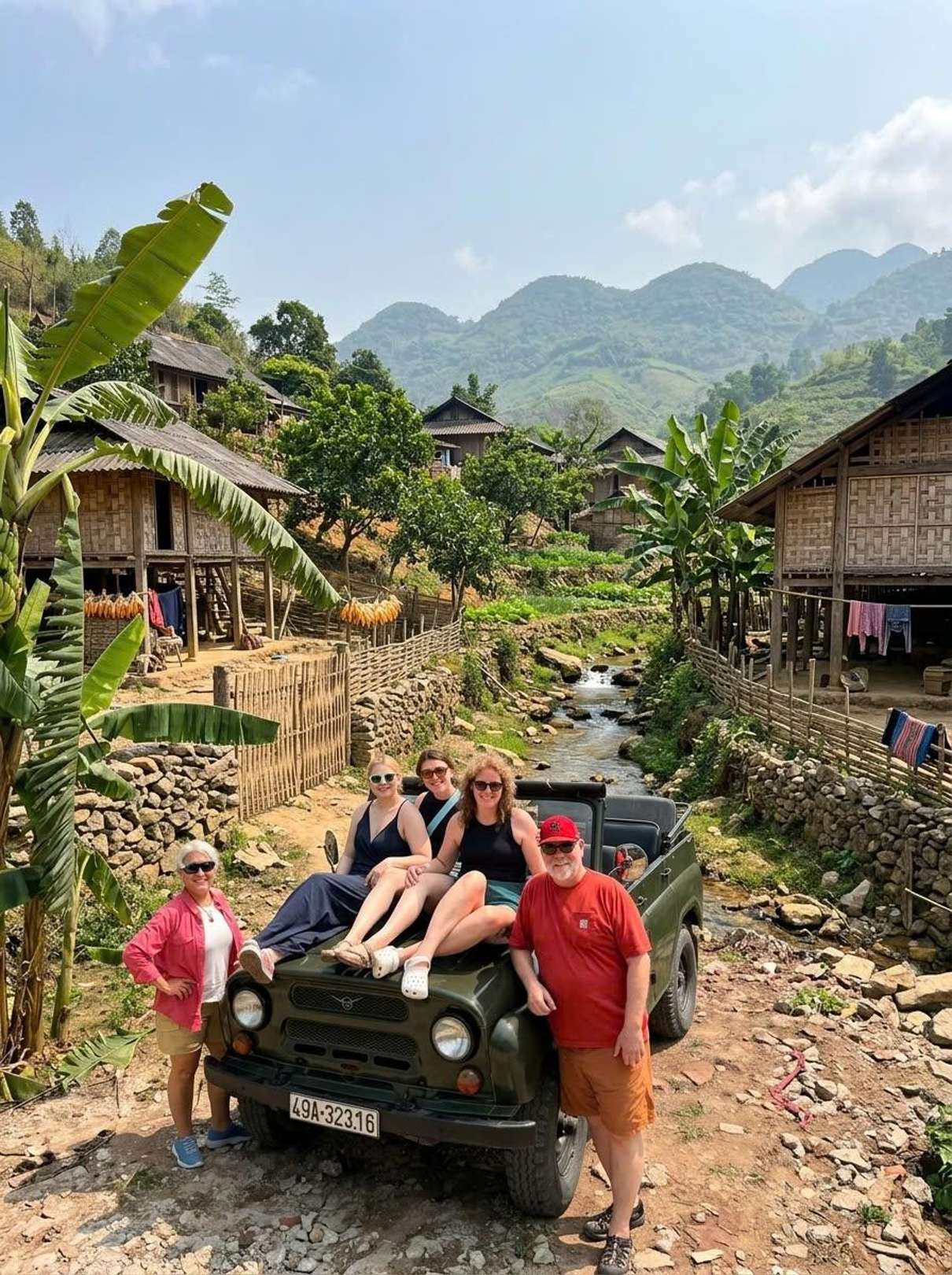
Sapa Open-Air Jeep Tour: Lao Chai, Ta Van Villages & Moana
Area 2: the edges of town
Hotels on the roads out of town, towards the Fansipan cable car or Ta Phin, often have big valley views and more space. Some resorts and larger hotels sit here.
- Pros: views, quiet, often better value for the space.
- Cons: a taxi or long walk to the centre, especially at night.
- Best for: couples and families who will spend time at the hotel.
Area 3: Muong Hoa Valley homestays (Lao Chai, Ta Van and beyond)
The villages of Lao Chai and Ta Van are 7 to 10 km below the town, among the most famous terraces. Many families run homestays here, from simple rooms in a family house to stylish bungalows.
- Pros: wake up to terraces, quiet evenings, contact with local families, home-cooked dinners.
- Cons: basic facilities in some places, steep paths, few restaurants, and you need transport back to town.
- Rough prices: from about VND 200,000 per person for a shared homestay room to VND 1 to 2 million or more for a private bungalow (approximate).
- Best for: couples, photographers, trekkers and slow travellers.
Tips
- Confirm hot water and heating if you travel between November and March.
- Check how the homestay is reached; some are a walk from the road.
- Dinner with the family is usually available; book it in advance.
Area 4: Ta Phin and other villages
Ta Phin, about 12 km from town, is a Red Dao and Black H'mong village known for herbal baths. A few homestays here offer a quieter, more rural stay.
- Pros: very quiet, local atmosphere, herbal baths.
- Cons: simple facilities and limited transport.
- Best for: travellers with three or more nights.
How to choose by trip length
- One night: stay in the town centre. You will not waste time on transfers.
- Two nights: one night in town, one in the valley, or both in town with day tours.
- Three or more nights: split between town and a valley homestay, or try Ta Phin.
What to check before booking
- Heating and blankets in winter: temperatures can fall close to freezing at night from December to February.
- Damp: Sapa is humid. Recent reviews mentioning mould or damp are a warning sign.
- Hot water: some homestays use solar heating, which can be weak on cloudy days.
- Access: is there a road to the door, or a path with steps? This matters with luggage.
- Cancellation terms, especially in the rainy season.
- Weekend prices: Friday and Saturday nights cost more and sell out early.
Day tours from wherever you stay
Our day tours start at Sapa Stone Church, and hotel pick-up in the town centre is available on request. The half-day open-air Jeep tour is an easy way to see the valley villages even if you stay in town: viewpoint above Muong Hoa, a short walk through Lao Chai and Ta Van, coffee by the stream and Moana, in four to four and a half hours from $50 per person.
Next, read how to get from Hanoi to Sapa, how to get around and the first-time itinerary.
Frequently asked questions
What is the best area to stay in Sapa for first-timers?
The town centre near the Stone Church. Restaurants, shops and tour meeting points are all within walking distance.
Is it worth staying in a valley homestay?
Yes, for at least one night if you like quiet and scenery. Check heating, hot water and how to get back to town.
Do Sapa hotels have heating?
Many do, but not all. If you travel from November to March, confirm heating or electric blankets before booking.
Do your tours pick up from hotels?
Day tours start at Sapa Stone Church, and hotel pick-up in the town centre is available on request.
